Cuban food is often associated with familiar dishes like ropa vieja, picadillo, rice and beans, and roast pork. But understanding Cuban cuisine takes you beyond a list of names. Its character comes from the way aromatic ingredients, slow cooking, citrus, root vegetables, rice, beans, plantains, and meats come together.
Cuban cooking also reflects the island’s layered cultural history. Indigenous ingredients and traditions, Spanish cooking, African influences, and other Caribbean influences all contributed to the cuisine that developed over time.
The result is food that can be savory and deeply seasoned without depending on intense heat, with plenty of room for contrasts between rich meats, bright acidity, earthy starches, and naturally sweet ingredients.
Here’s what to know if you’re beginning to explore Cuban food.
What Is Cuban Food?
Cuban food is a Caribbean cuisine shaped by the ingredients, cooking traditions, and cultural influences that developed on the island over centuries.
Spanish influence is particularly important, but it is only part of the story. Indigenous Taíno ingredients and techniques, African culinary traditions, and influences from other communities that arrived in Cuba all contributed to its development. The Smithsonian, for example, describes the history of dishes such as ajiaco through the interaction of Indigenous, Spanish, and African ingredients and cooking practices.
That history helps explain why Cuban cuisine doesn’t fit neatly into one category.
A Cuban meal might bring together slow-cooked meat, rice and beans, yuca, plantains, and an aromatic seasoning base. Individual dishes vary, but the cooking often emphasizes depth and balance rather than simply making food hot or heavily spiced.
Cuban food isn’t defined by heat. Aromatics, slow cooking, acidity, and contrast do much of the work.
What Flavors Define Cuban Cuisine?
One of the easiest ways to understand Cuban cuisine is to pay attention to how its flavors are built.
Sofrito and Aromatics
Sofrito is one of the important foundations of Cuban cooking. A typical Cuban sofrito centers on aromatics such as onion, garlic, and peppers, which are cooked together to build a savory base for dishes.
It’s not necessarily the flavor you notice first when eating a finished dish. Instead, it creates the foundation underneath it.
Citrus and Acidity
Citrus brings brightness to richer preparations. Sour orange, lime, and other acidic ingredients can be used in marinades and sauces, helping balance meats and other hearty foods.
That contrast is important. A rich pork or beef preparation becomes more interesting when there’s acidity to cut through it.
Sweet and Savory Contrast
Plantains are a good example of how Cuban cooking can move between savory and sweet. Green plantains can be fried into tostones, while ripe plantains become maduros with a softer texture and sweeter flavor.
Other dishes create contrast in different ways. Cuban-style picadillo, for example, is known for combining seasoned ground beef with ingredients that can include olives, capers, and raisins, creating a distinctly sweet-savory profile.
Slow-Cooked Depth
Many classic Cuban preparations rely on time rather than aggressive seasoning.
Meats can be cooked until tender, allowing aromatics, sauces, and marinades to work their way into the dish. Ropa vieja is a classic example: shredded beef becomes the vehicle for a deeply seasoned preparation rather than being treated as a simple grilled steak.
Essential Ingredients in Cuban Cooking
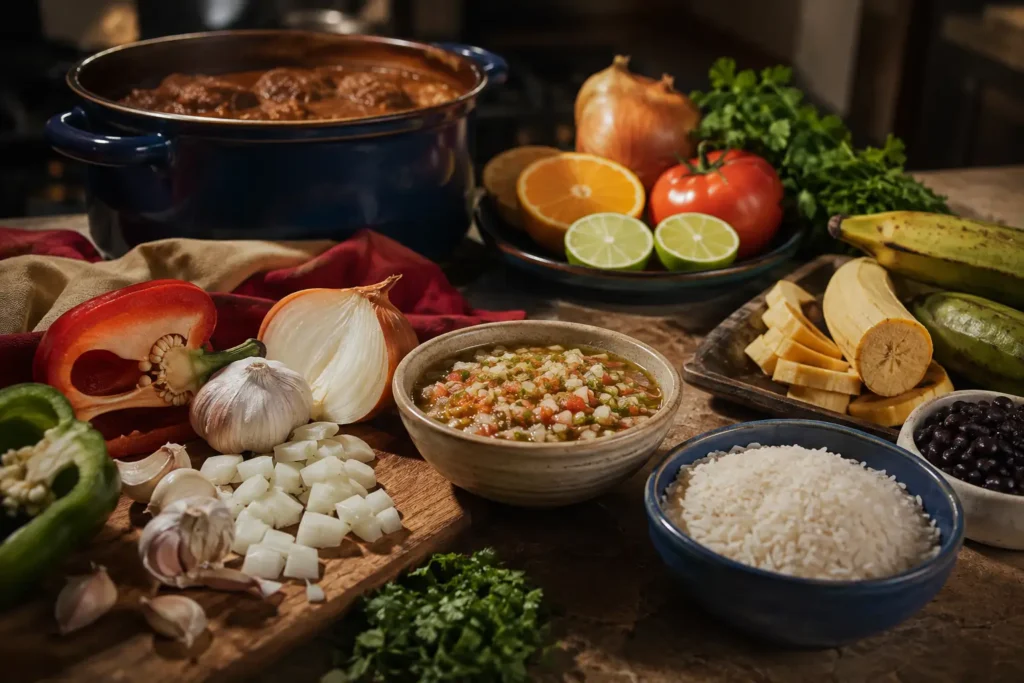
You don’t need to memorize an entire pantry to recognize the foundations of Cuban food. A relatively small group of ingredients appears again and again in different combinations.
Aromatics and Seasonings
- Garlic
- Onion
- Peppers
- Sofrito
- Cumin
- Oregano
- Citrus
- Mojo
These ingredients provide much of the savory, aromatic character associated with Cuban cooking.
Rice and Beans
Rice and beans are central to many Cuban meals. Depending on the preparation and region, rice and beans may be cooked separately or together, as with preparations commonly known as congrí or moros y cristianos.
They’re not simply filler on the plate. Their mild, earthy flavors provide a foundation for more intensely seasoned meats and sauces.
Plantains
Plantains appear in several forms and at different stages of ripeness.
Tostones are made from green plantains that are fried and flattened, giving them a crisp exterior. Maduros use ripe plantains and have a softer, sweeter character.
That difference makes plantains particularly useful alongside savory dishes.
Root Vegetables
Yuca, malanga, boniato and other root vegetables have long played an important role in Cuban cooking. They can be boiled, fried, incorporated into stews, or served alongside meat.
Their earthy, starchy quality works especially well with acidic sauces and richly seasoned proteins.
Traditional Cuban Food: Dishes to Know
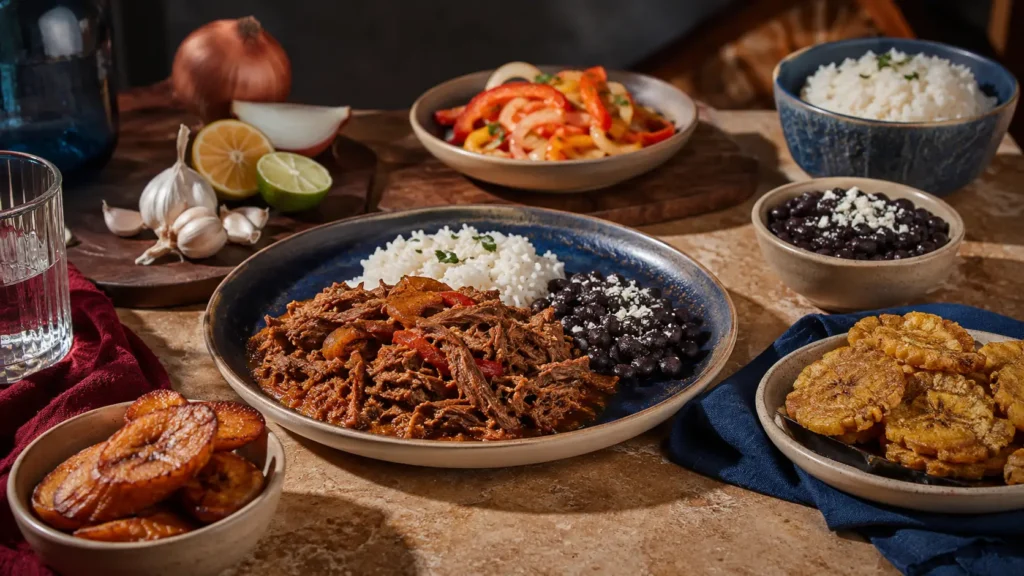
If you’re exploring traditional Cuban food for the first time, these are some of the dishes and preparations worth recognizing.
Ropa Vieja
Ropa vieja is one of Cuba’s best-known beef dishes. The name literally means “old clothes,” referring to the appearance of the shredded meat.
The beef is cooked until tender and pulled apart, then served with a seasoned sauce. Its Spanish origins are part of the broader story of how European culinary traditions became part of Cuban cooking.
Its appeal is straightforward: tender beef, a deeply savory base, and enough acidity and seasoning to keep the dish from feeling heavy.
Picadillo
Picadillo is a seasoned ground-beef preparation with many variations. Cuban versions commonly combine beef with aromatic vegetables and can include tomato, olives, capers, raisins, and spices.
The combination of savory meat with salty and sweet elements is one of the reasons picadillo is such a useful introduction to Cuban flavor.
Arroz con Pollo
Arroz con pollo brings together chicken and rice in a preparation built around seasoning and aromatics. It’s a good example of how a familiar combination can become distinctly Cuban through its cooking method and flavor base.
Congrí and Moros y Cristianos
Rice and beans are staples of Cuban cooking, but the preparations have their own identities.
Moros y cristianos traditionally refers to white rice cooked with black beans, while congrí is commonly associated with rice cooked with beans, particularly red beans in eastern Cuba. Terminology and regional usage can vary.
Either way, the combination demonstrates how a simple pairing can become a defining part of a cuisine.
Tostones and Maduros
These plantain preparations are worth knowing because they show two very different sides of the same ingredient.
Tostones are crisp and savory. Maduros are softer and sweeter.
They’re often served alongside larger meals, where their texture and flavor provide contrast to meat, rice, and beans.
Yuca with Mojo
Yuca is a starchy root vegetable with a mild flavor that works well with stronger sauces. Served with mojo, it becomes a simple example of Cuban cooking’s preference for pairing a substantial base with bright, aromatic flavors.
How Cuban Food Balances Rich, Bright and Sweet Flavors
One reason Cuban food can feel satisfying without being overwhelmingly heavy is the use of contrast.
A rich meat preparation might sit beside rice, beans, yuca, or plantains. Garlic and aromatics add depth, while citrus or another acidic element can bring brightness. Sweet plantains can provide another layer of contrast.
The goal isn’t necessarily complexity for its own sake. It’s about making familiar ingredients work together.
That balance is also why Cuban food can be approachable to someone who hasn’t explored much Caribbean cuisine. The ingredients may be unfamiliar in combination, but the underlying ideas, roasted or slow-cooked meats, rice, beans, fried starches, savory sauces, are easy to recognize.
How Cuban Food Is Being Reinterpreted Today
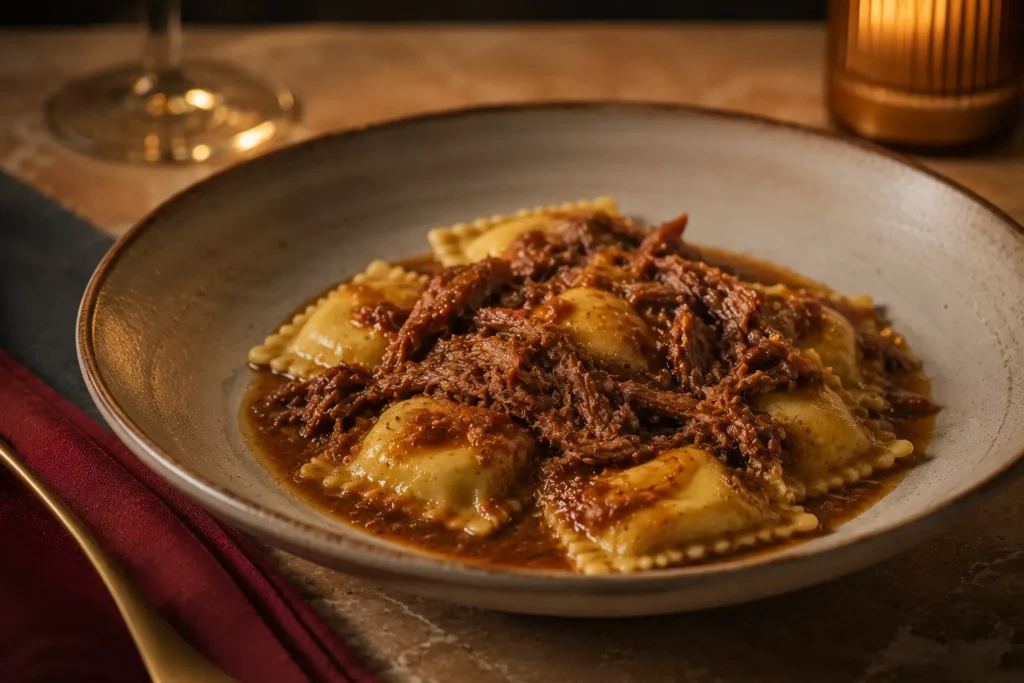
Traditional Cuban food doesn’t have to remain frozen in its classic forms.
A culinary tradition can retain recognizable ingredients and techniques while interacting with another cuisine. That’s where contemporary interpretations become interesting: instead of reproducing a traditional dish exactly, a chef can take a familiar Cuban flavor or preparation and place it in an entirely different culinary framework.
Prado 264 in Louisville takes this approach through its Italo-Cuban cuisine, bringing Italian culinary traditions into conversation with Cuban influences.
The menu offers several clear examples.
Ropa Vieja Ravioli takes the familiar Cuban preparation of ropa vieja and places it inside ricotta ravioli, accompanied by a Bacardi rum sauce.
Lasagna al Picadillo uses Cuban picadillo ragù within an Italian lasagna format, while Picadillo Bolognese brings Cuban-style picadillo into a bucatini preparation.
Then there’s Risotto a la Chorrera, an Italian risotto inspired by Cuban arroz con pollo and built with sofrito.
These aren’t examples of traditional Cuban food. They’re examples of what happens when Cuban culinary ideas interact with another culinary tradition.
Cuban Food Meets Italian Tradition
The connection between Cuban and Italian cooking becomes especially interesting when you look at the ingredients rather than just the names of dishes.
Pasta, ravioli, lasagna and risotto provide unmistakably Italian structures. Picadillo, ropa vieja, sofrito and Cuban culinary references bring another set of flavors and traditions into those structures.
That’s the idea behind Prado’s Italo-Cuban approach.
For someone in Louisville who already knows traditional Cuban dishes, this offers a different way to encounter familiar flavors. For someone new to Cuban cuisine, dishes such as Ropa Vieja Ravioli or Lasagna al Picadillo can provide a recognizable entry point while still introducing distinctly Cuban elements.
The same idea extends beyond the food. Prado’s cocktail program includes Cuban references such as the Mojito Clasico and Cuba Libre, alongside drinks such as the Limoncello Sour and Veneto Mojito. The latter is particularly fitting within the broader Italian-Cuban conversation.
The result is not a traditional Cuban restaurant in the classic sense. It’s a modern dining concept built around the interaction between two culinary traditions.
Exploring Cuban Food in Louisville
If you’re searching for Cuban food in Louisville, it helps to decide what kind of experience you’re looking for.
A restaurant centered on traditional Cuban cooking will offer one perspective. A contemporary concept influenced by Cuban cuisine may offer another.
For diners interested in the latter, Prado 264 is located on Bardstown Road in The Highlands and approaches Cuban culinary influences through an Italian and Cuban lens. Its food is part of a broader social dining experience that also includes cocktails, live music, and an energetic atmosphere.
Rather than treating Cuban influences as a standalone theme, the restaurant uses them as part of a larger culinary identity. Dishes such as Ropa Vieja Ravioli and Risotto a la Chorrera make that idea tangible on the plate.
For someone beginning to explore Cuban cuisine, that can be a useful reminder: there isn’t only one way to encounter the flavors and traditions of Cuba.
Frequently Asked Questions About Cuban Food
What is Cuban food known for?
Cuban food is known for aromatic seasoning, slow-cooked meats, rice and beans, plantains, root vegetables, citrus, and preparations built around ingredients such as garlic, onion and peppers. Its culinary identity reflects Indigenous, Spanish, African, Caribbean, and other influences that developed over time.
Is Cuban food spicy?
Cuban cuisine isn’t generally defined by intense heat. Its flavor often comes from aromatics, herbs and spices, citrus, slow cooking, and the contrast between savory, sweet and acidic ingredients.
What are some examples of traditional Cuban food?
Ropa vieja, picadillo, arroz con pollo, congrí, moros y cristianos, tostones, maduros, yuca with mojo, and roast pork are among the preparations commonly associated with Cuban cuisine.
What ingredients are commonly used in Cuban cooking?
Common ingredients include garlic, onions, peppers, rice, beans, plantains, yuca and other root vegetables, along with seasonings such as cumin and oregano and acidic ingredients such as citrus.
What is Italo-Cuban cuisine?
Italo-Cuban cuisine brings elements of Italian and Cuban culinary traditions together. At Prado 264, examples include Ropa Vieja Ravioli, Lasagna al Picadillo, Picadillo Bolognese, and Risotto a la Chorrera.
Cuban food is easier to understand once you stop looking at it as a list of famous dishes and start looking at how the cuisine builds flavor: aromatics, slow cooking, citrus, starches, meats, beans, plantains, and contrast.
Traditional recipes provide the foundation. Contemporary cooking can take those ideas in new directions without losing their connection to Cuban culinary influences.
For Louisville diners who want to explore that intersection, Prado 264 offers one modern interpretation through its Italo-Cuban menu.