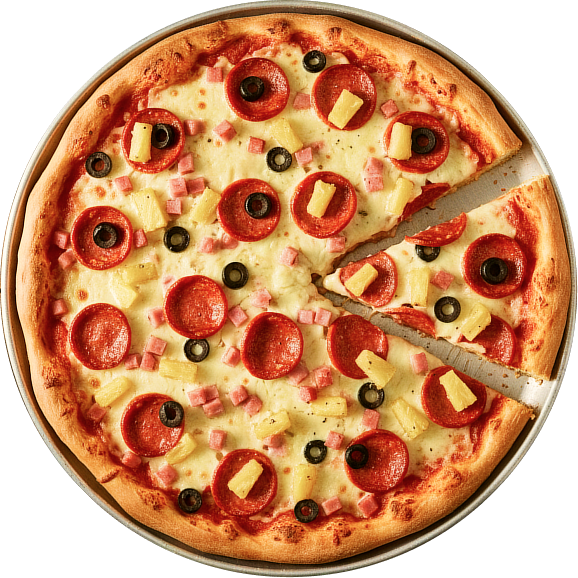
Pizza may be the first thing that comes to mind when you think about Italian food in Louisville. Fair enough. But stop there and you miss a huge part of what makes Italian cuisine interesting.
There are filled pastas and slow-cooked sauces, creamy risottos, roasted meats, cured pork, cheeses, seafood, and wines that can change the character of a meal entirely. Just learning a few dishes and ingredients makes it easier to look at an Italian or Italian-inspired menu and find something beyond the usual order.
And in a city like Louisville, exploring those traditions doesn’t always mean finding them exactly as they would appear in Italy. Sometimes the more interesting question is what happens when Italian cooking meets another food culture.
Italian Cuisine Goes Far Beyond Pizza
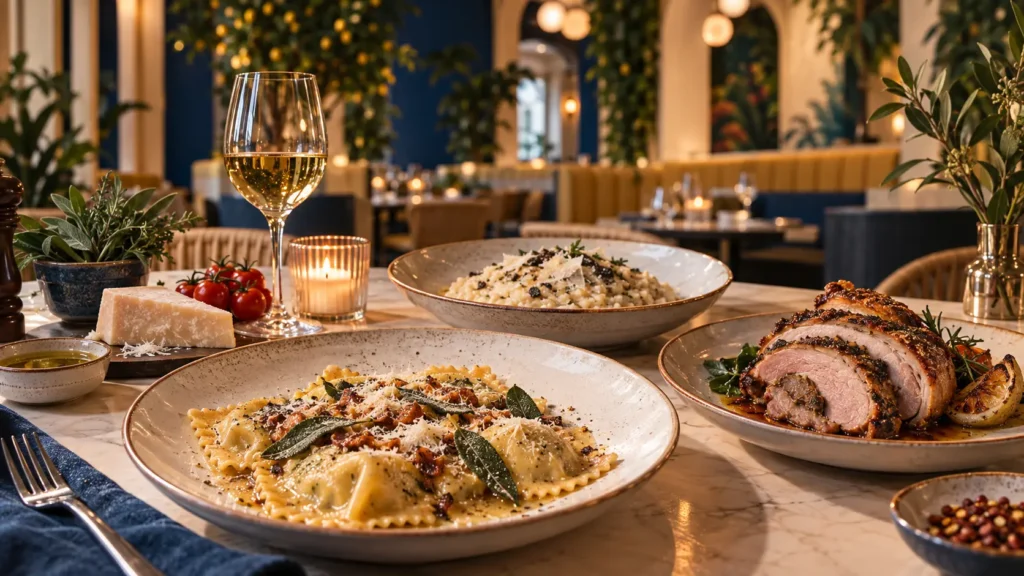
Italian food isn’t one narrow collection of pizza and pasta dishes. Cooking varies considerably across Italy, and ingredients, techniques, and signature dishes change from one region to another.
For a diner, you don’t need to know every regional distinction to start exploring. A few categories open up the menu quickly:
- Filled and layered pastas such as ravioli and lasagna
- Long pastas paired with sauces built around tomato, meat, seafood, cheese, or olive oil
- Risotto, where rice takes center stage instead of pasta
- Roasted meats such as porchetta
- Cheeses and cured meats including ricotta, Parmigiano-Reggiano, prosciutto, and guanciale
- Italian wines, from bright sparkling styles to fuller reds
Traditional Italian food gives you the foundation, but contemporary restaurants often take those same forms and ingredients in new directions.
Pizza is one door into Italian food. It isn’t the whole room.
Start With Pasta—But Look Beyond Spaghetti
Pasta is still one of the easiest places to begin. The trick is to look beyond the word pasta itself.
A plate of bucatini doesn’t eat like ravioli. Lasagna has little in common texturally with delicate capellini. Pappardelle’s broad ribbons work differently with a sauce than thin strands do.
Then there are filled pastas.
Ravioli can carry cheese, meat, vegetables, or combinations of ingredients inside the pasta itself. That makes it particularly adaptable when chefs begin working across culinary traditions.
At Prado 264 in Louisville, that idea appears in the Ropa Vieja Ravioli: ricotta-filled ravioli topped with slow-braised ropa vieja and a house-made Bacardi rum sauce.
It isn’t presented as traditional Italian food, nor should it be understood that way. The Italian structure is recognizable; what happens inside and around it comes from Prado’s Italo-Cuban point of view.
The same idea takes another form with Lasagna al Picadillo, where lasagna is built with Cuban-style picadillo ragù and house-made pomodoro.
These are useful dishes to keep in mind when reading a menu. Instead of asking only, “Is this Italian?”, look at the individual pieces: What kind of pasta is being used? What’s in the filling? How is the sauce built? Where are the flavors coming from?
Risotto Shows Another Side of Italian Cooking
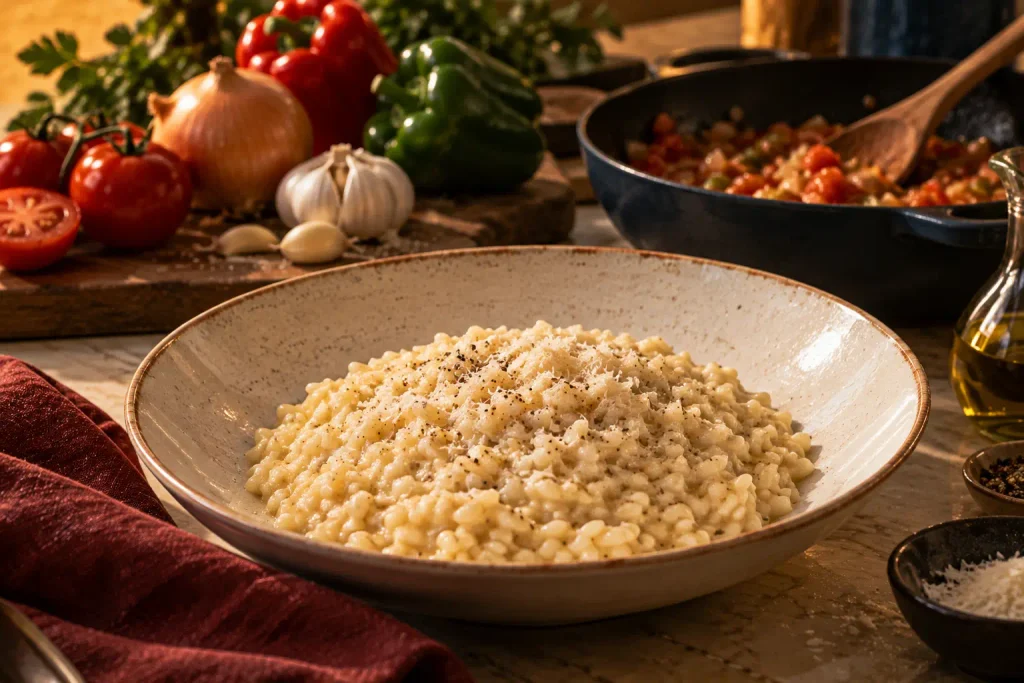
If your Italian order almost always involves pasta, risotto is an obvious next move.
Risotto is a rice preparation associated especially with northern Italian cooking. Rather than treating rice as a plain side, the cooking process builds a creamy consistency around the grains. The result can feel substantial without resembling pasta at all.
It’s also a good example of why technique can be as important as a particular ingredient when cuisines evolve.
Prado’s Risotto a la Chorrera starts from risotto but moves toward Cuba, combining it with chicken, sofrito, and a tomato broth, inspired by the Cuban classic arroz con pollo a la chorrera.
Here, neither reference disappears. You can recognize the Italian rice preparation while the sofrito and arroz con pollo inspiration pull the dish in another direction.
If you’re exploring Italian cuisine beyond its most familiar dishes, that’s worth paying attention to: sometimes the technique tells you as much as the name.
Don’t Overlook the Meat Dishes
Italian cooking doesn’t end with pizza, pasta, and risotto.
Porchetta is a good example. This Italian preparation centers on seasoned, roasted pork and gives you a completely different way into the cuisine.
It also travels well as an idea.
Prado takes porchetta into its own culinary vocabulary with Latin Porchetta, serving slow-roasted porchetta with guanciale congrís, golden tostones, and mint gremolata.
That’s a much clearer expression of what Italo-Cuban cooking can mean than simply placing an Italian dish and a Cuban dish next to each other. The traditions interact on the same plate.
Learn a Few Italian Ingredients and Menus Get Easier to Read
Restaurant menus can sometimes feel like they expect you to arrive with a glossary. You don’t need one.
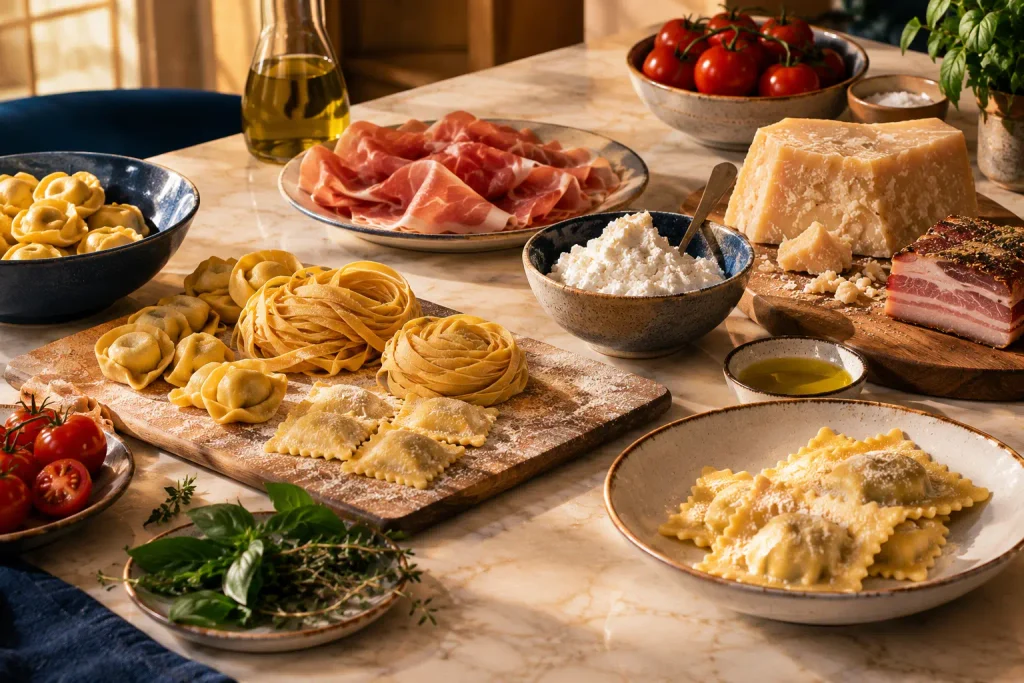
Knowing a handful of recurring Italian terms makes it much easier to understand what you’re ordering:
- Ricotta: a soft, mild cheese you’ll often find in filled pasta and layered dishes.
- Prosciutto: Italian dry-cured ham, usually sliced thin.
- Guanciale: cured pork jowl with a rich, fatty character.
- Pomodoro: simply tomato in Italian; on menus, the term commonly points toward a tomato-based preparation or sauce.
- Parmigiano-Reggiano: the hard, aged Italian cheese often grated or shaved over dishes.
Once those words become familiar, you can start reading a menu by components rather than choosing only dishes whose names you already recognize.
That makes trying something new considerably less mysterious.
Italian Food Doesn’t Have to Stay Completely Traditional
There’s value in understanding traditional Italian food. It gives you a reference point. But a restaurant doesn’t have to reproduce a classic dish unchanged for Italian culinary tradition to be meaningful.
That’s where contemporary cooking becomes interesting.
A chef can preserve a pasta form, technique, ingredient, or basic structure while changing what surrounds it. Sometimes another culinary tradition becomes part of the conversation.
That is the territory Prado 264 occupies in Louisville.
Prado’s culinary identity is built around the interaction of Italian tradition and Cuban culture, rather than treating the two as separate halves of the menu. Its Ropa Vieja Ravioli, Risotto a la Chorrera, and Latin Porchetta make that idea tangible. The ravioli remains ravioli. The risotto remains recognizable as risotto. Porchetta remains the starting point. Cuban ingredients and preparations change where each dish goes next.
Tradition doesn’t have to disappear for a dish to evolve.
That distinction is useful when exploring Italian food around Louisville. Some nights you may want a familiar classic. On another note, you might be more interested in seeing what a restaurant does with the tradition once it has permission to move beyond it.
What to Look for When Exploring Italian Food in Louisville
You don’t need a checklist every time you go out to dinner. But if you’re trying to get beyond pizza, a few questions can lead you toward more interesting choices.
Look at the pasta section. Is everything familiar, or are there different shapes, fillings, and sauces?
Check beyond pasta. Is there risotto, seafood, roasted meat, polenta, or another preparation you haven’t tried?
Pay attention to ingredients such as ricotta, prosciutto, guanciale, pomodoro, and Parmigiano-Reggiano. Once you recognize them, you’ll have a much better sense of what a dish might be like before ordering.
And notice how the restaurant describes itself. There is a difference between traditional Italian cooking and a restaurant using Italian techniques as the foundation for something contemporary. Neither has to replace the other.
Prado 264 belongs to that second conversation. Located on Bardstown Road in The Highlands, it approaches Italian culinary tradition through a modern Italo-Cuban concept rather than positioning itself as a traditional Italian restaurant.
If dishes like ropa vieja inside ravioli or Cuban-inspired risotto have made you curious, the natural next step is simply to see what else is being served: [INTERNAL LINK: Menu | explore Prado’s Italo-Cuban menu].
Pizza can wait for another night.